
Ambient Air Quality
Ambient Air Quality Index (AQI) Explained
Air quality has a direct impact on public health, the environment, and overall quality of life. However, understanding air pollution levels can be complex when expressed only in technical units like µg/m³ or ppm. The Ambient Air Quality Index (AQI) simplifies this information into an easy-to-understand scale that indicates how clean or polluted the air is and what it means for human health.
What Is AQI?
The Ambient Air Quality Index (AQI) is a standardized way to measure and report air quality. It converts concentrations of various air pollutants into a single number and category that represents the overall air quality at a specific location and time.
AQI helps answer a simple but important question:
Is the air safe to breathe?
It is widely used by environmental agencies, industries, and smart cities to communicate air pollution levels in a simple and effective way.
Why AQI Is Important
AQI provides a clear indication of air quality conditions and their potential health impacts. Instead of interpreting multiple pollutant readings, AQI combines them into one value, making it easier for communities, industries, and authorities to make informed decisions.
AQI helps:
- Inform the public about current air quality conditions
- Identify pollution trends and patterns
- Support environmental planning
- Enable timely preventive actions
- Protect public health
Pollutants Included in AQI
AQI is calculated based on the concentration of key air pollutants commonly found in ambient air. These typically include:
- Particulate Matter (PM2.5 and PM10)
- Nitrogen Dioxide (NO2)
- Sulfur Dioxide (SO2)
- Carbon Monoxide (CO)
- Ozone (O3)
- Ammonia (NH3) (in some regions)
AQI Categories and Their Meaning
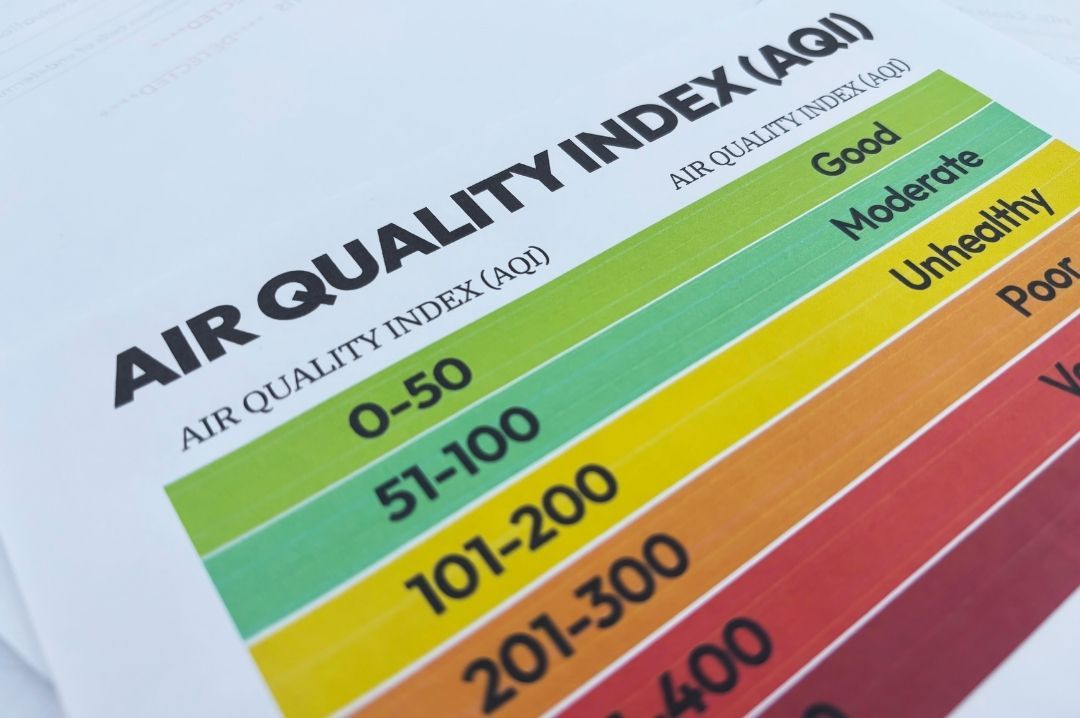
AQI values are divided into categories that indicate different levels of health concern. Each category represents a range of air quality conditions and associated risks.
| AQI Range | Category | Air Quality Level | |
| 0 – 50 | Good | Air quality is satisfactory with minimal risk | |
| 51 – 100 | Satisfactory | Acceptable air quality with minor concerns | |
| 101 – 200 | Moderate | May affect sensitive individuals | |
| 201 – 300 | Poor | Breathing discomfort for many people | |
| 301 – 400 | Very Poor | Increased health risks | |
| 401 – 500 | Severe | Serious health impacts possible |
Importance of Continuous AQI Monitoring
Continuous AQI monitoring helps track pollution levels and identify sudden increases in pollutants. Real-time monitoring allows industries and authorities to take corrective actions quickly.
With continuous monitoring:
- Pollution spikes can be detected early
- AQI trends can be analyzed
- Pollution sources can be identified
- Preventive actions can be taken
Systems like SAM-X provides continuous ambient monitoring, while MDM modules ensures the accurate particulate measurement for AQI calculation.
Conclusion
The Ambient Air Quality Index (AQI) is an essential tool for understanding air pollution and its impact on health and the environment. By converting complex pollutant data into a simple and meaningful scale, AQI helps industries, authorities, and communities make informed decisions.
With reliable monitoring solutions such as SAM-X and MDM modules, continuous AQI monitoring becomes easier and more effective, supporting cleaner air and healthier communities.